
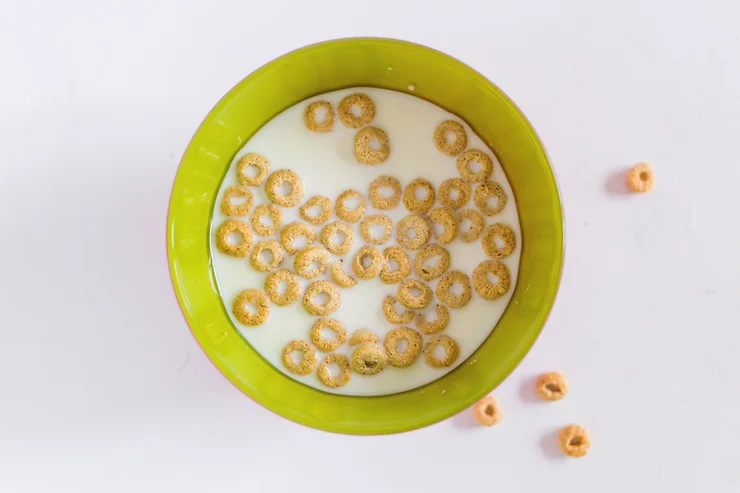
Cereal is a breakfast staple, but it may not do the best job at keeping you full. As a registered dietitian, I get questions about cereal all the time, from how many calories are in a bowl to whether it can make you gain weight. In this guide, I’m covering everything you need to know to make smarter cereal choices, plus my best tricks for turning a basic bowl into a filling, balanced meal.
How Many Calories Are in a Bowl of Cereal?
It depends on the cereal and how much milk you add, but here’s a general breakdown:
A typical bowl of cereal (1 cup) with ½ cup of milk contains roughly 200-289 calories. Here’s how the numbers break down:
- Cereal alone (1 cup): 100-200 calories depending on the variety
- Whole milk (½ cup): about 75 calories
- 2% milk (½ cup): about 60 calories
- 1% milk (½ cup): about 50 calories
- Skim milk (½ cup): about 45 calories
- Unsweetened soy milk (½ cup): about 40-50 calories
- Unsweetened oat milk (½ cup): about 45 calories
- Unsweetened almond milk (½ cup): about 15-20 calories
Keep in mind that serving sizes vary wildly—from ¼ cup to 1 cup depending on the cereal, so it’s easy to pour a much larger serving without realizing it.
Can Cereal Make You Fat?
Cereal itself won’t make you gain weight—but how you eat it can. The biggest pitfalls are oversized portions, high-sugar varieties, and cereal that’s so low in protein and fiber that it leaves you hungry and reaching for more food an hour later. Choosing a whole grain, fiber-rich cereal and pairing it with protein and healthy fat—like nuts, seeds, and milk—creates a balanced bowl that works for your goals rather than against them.
How to Eat Cereal Without Milk
No milk? No problem. I’m a huge fan of skipping the milk in favor of these alternatives:
- Greek yogurt: Spoon cereal on top for crunch and a major protein boost
- Cottage cheese: Surprisingly delicious with low-sugar granola or low-sugar, high-fiber cereals
- Dry as a snack: Mix with popcorn, nuts, seeds, and unsweetened dried fruit for a trail mix
- As a topping: sprinkle over smoothie bowls or oatmeal for texture
How to Make Cheerios Better
Cheerios are a solid base because they’re low in sugar and whole grain. To make them even better:
- Add a handful of berries for fiber and natural sweetness
- Sprinkle chia or hemp seeds for protein and healthy fat
- Use pea or soy milk instead of water-thin almond milk for more protein
- Serve over a higher protein base (such as Greek yogurt or cottage cheese) instead of milk
How to Make Cereal More Filling
Add fruit
Chopped or grated apple or pear, strawberries or blueberries, and cherries are all tasty cereal add-ins that are rich in fiber, making your bowl more filling. If you’re feeling adventurous, add some veggies, too! Grated zucchini and matchstick carrots are veggies that pair well with fruits. These veggies also work well in hot cereal, like oatmeal, and in overnight oats.
Get fuller with fat
Chopped nuts or a sprinkling of seeds (such as chia, hemp, or pumpkin seeds) add crunch and deliciousness to your bowl of cereal, and these fat-filled foods also keep you fuller. Plus, these plant-based add-ins are potent anti-inflammatory agents, so they not only create a more filling cereal bowl, they keep you healthier, too.
Mix in some protein
To keep your meal balanced and make it last ‘til lunch, you need some protein. This nutrient gives you a small metabolic boost and if you eat sufficient amounts (about 20 grams at each of your three meals), it’s enough to counter the typical one- to two-pound annual weight gain that might settle on your waistline starting in your late 30s.
Milk, unsweetened soy milk, and pea-based nondairy milk provide between 8-10 grams of protein, but other dairy alternatives (including almond and oat milks) fall short. Nuts and seeds (see above) help boost the content a bit, but to get to the full 20 grams, consider having a hard-boiled egg or another protein-rich option (like Greek yogurt) on the side. Or, skip the milk and use your cereal as a yogurt or cottage cheese topper, instead. (For more protein-packed breakfast ideas, read my blog on High Protein Breakfast Foods).
Stick with whole grain varieties
Cereal nutrition varies widely! To get the healthiest and most filling cereal, choose one that’s predominantly (or ideally, fully) whole grain. On the label, you’re looking for the first ingredient to say whole wheat, brown rice, oats, whole grain corn, or another whole grain (such as quinoa, amaranth, or sorghum). If you see enriched wheat as the first ingredient, it means the cereal is made mostly of refined, white grains. In other words, skip it! Enriched cereals have been stripped of their nutrients (though some vitamins and minerals are added back in) and are less filling and easier to overeat. (For more on processed foods, see my blog 4 Processed Foods to Avoid and What To Eat Instead).
Look for fiber-rich options
When you’re looking at a nutrition facts panel, check to see that your cereal has at least 3 grams of fiber, though more is better, provided that fiber is coming from real foods (like whole grains or fruit) rather than from manufactured ingredients (like inulin). (Eating an excessive amount of manufactured fibers through cereal and other foods can cause gas and bloating and you don’t want that!) In addition to the fact that fiber-filled cereals will be more filling, a fiber-rich bowl can improve your bowel habits, and in studies, people who have better bowel habits report lower levels of stress and anxiety and higher levels of wellbeing. (1,2) (Here are my picks for high fiber cereals.)
Limit added sugars
I know you know this, but many cereals—even whole grain varieties—are loaded with added sugars. Let’s face it: You’re eating breakfast to wipe out hunger and fuel a productive morning, and sugar isn’t your friend on either front. Empty sugar calories don’t contribute to a filling cereal and too much sugar will only lead to less focus and attention (in other words, a less productive morning). Ideally, choose a cereal with no added sugar. If you like your cereal a little sweet, cap the added sugars at 6 grams (about 1 ½ teaspoons). And if you’re choosing plant-based milk, check labels to make sure you aren’t pouring sugar into your cereal with your dairy alternative. Many of these milks (whether flavored or unflavored) contain sneaky amounts of sugar. (Keep reading for more tips on lowering added sugars from cereal.)
Avoid cereals with artificial colors, sweeteners, and preservatives
This has nothing to do with creating a filling cereal bowl, but it’s still a smart idea. These types of ingredients aren’t health helpers, and instead, they’re usually a flag that you’re looking at something that has been processed to an unhealthy degree. It’s good nutritional sense to limit these ingredients as much as possible.
4 Healthy Cereals
Since I know you love product picks, here are three options that meet these parameters:
Food For Life Ezekiel 4:9 Organic Sprouted Grain Cereal, Cinnamon Raisin
Note that I use affiliate links for the products I vet for my readers. These are my genuine recommendations and represent my years of experience testing and vetting products. It doesn’t cost you anything to shop through these links, and you’re under no obligation to shop or purchase through my site. When you do make a purchase through an affiliate link, I receive a nominal commission, which helps me provide this service to you. Thanks for supporting my site!
4 Tricks to Make Sugary Cereal Healthier
If you’re hooked on less filling, sugary cereal, here are some tricks to make your cereal habit healthier
- Enjoy it as a snack in trail mixes, along with other nutritious ingredients, like unsweetened dried fruits, nuts, seeds, and popcorn (which is a whole grain).
- Mix sweetened cereals with unsweetened ones to lower the added sugar content. Eventually, see if you can get down to a lightly sweetened or unsweetened variety.
- Have it as a side dish. If you love a bowl of sweetened cereal and milk, have it alongside a more healthful meal instead of as the main dish. For example, have scrambled eggs with veggies and avocado plus a side of cereal instead of a side of toast.
- Have cereal for dessert! If you love sweetened cereal, have a portion for dessert—with or without milk. Dessert doesn’t have to be ice cream, cookies, and candy! A sweetened cereal can be a good alternative and you’ll get some bonus nutrition if your sweetened cereal has whole grains and healthy amounts of fiber.
Frequently Asked Questions
What is the most filling cereal?
The most filling cereals are high in fiber and protein and low in added sugar. Look for whole grain varieties with at least 3 grams of fiber per serving. Bran-based cereals, oat-based cereals like Cheerios, and sprouted grain options like Ezekiel cereal tend to be the most satisfying choices.
How many calories are in a bowl of cereal with 1% milk?
A typical bowl of cereal (1 cup) with ½ cup of 1% milk contains roughly 150-250 calories, depending on the cereal variety. Higher-sugar, denser cereals will be on the higher end, while plain whole grain cereals will be on the lower end.
How much cereal should I eat in the morning?
Most cereal serving sizes range from ¼ cup to 1 cup, and most people pour far more than the suggested serving. A good rule of thumb is to pair whatever amount you choose with fruit, protein, and healthy fat to create a balanced, fiber-filled bowl that keeps you full until lunch.
Can cereal make you fat?
Cereal alone won’t cause weight gain, but portion size, sugar content, and what you pair it with all matter. A bowl of high-sugar cereal with little protein or fiber can leave you hungry quickly, leading to overeating later. Choosing a whole grain, fiber-rich cereal and adding protein and healthy fat creates a much more balanced meal.
How do you add protein to cereal?
The easiest ways to boost protein in your cereal bowl are to use dairy, pea, or soy milk instead of almond milk, add Greek yogurt or cottage cheese on the side, sprinkle hemp seeds on top, or have a hard-boiled egg alongside your bowl. Aiming for about 20 grams of protein at breakfast helps keep hunger at bay all morning. (Here are some high-protein breakfast ideas without eggs.)
Can you eat cereal without milk?
Absolutely. I do this regularly! Cereal works great with Greek yogurt or cottage cheese for a protein boost, dry as a trail mix ingredient, or as a crunchy topping for smoothie bowls and oatmeal.
Is cereal a healthy breakfast?
It can be, but it depends entirely on the cereal you choose and what you pair it with. A whole grain, low-sugar cereal with fiber, paired with a protein source and healthy fat, can absolutely be part of a healthy breakfast. The key is building a balanced bowl rather than relying on cereal alone.
REFERENCES
If you want to geek out on the science with me, links are below:





2 Responses
I have to say I love cereal, so I find other ways to eat it besides the typical breakfast. I hope this was helpful!