Semaglutide, a groundbreaking medication for managing blood sugar and promoting weight loss, has become increasingly popular. If you’ve heard of Ozempic, Wegovy, or Rybelsus, you already know some of the brand names for this class of drugs. But while these medications can be highly effective, pairing them with a thoughtful diet is essential for maximizing their benefits. That’s where my free semaglutide diet plan PDF comes in.
As a registered dietitian, I’ve created this guide to help you understand how to eat while on semaglutide. Keep reading for more information, practical advice, and the semaglutide diet plan PDF, which is appropriate for many GLP-1 users. (Ready to get started? You can grab your FREE 5-day meal plan here!)
What Is Semaglutide, and How Does It Work?
Semaglutide is a GLP-1 receptor agonist, a type of medication that mimics a naturally occurring hormone in your body. Here’s a breakdown of what it does:
Regulates Appetite. Semaglutide slows down how quickly food leaves your stomach, making you feel fuller for longer. This helps reduce hunger and control portions naturally.
Supports Blood Sugar Control. It helps your pancreas release more insulin, which lowers blood sugar by moving glucose into your cells for energy.
Promotes Weight Loss. By reducing cravings and promoting a sense of fullness, semaglutide can make it easier to adopt healthier eating habits and maintain a calorie deficit.
Semaglutide is sold under the names Ozempic, Wegovy, and Rybelsus. These medications require a prescription and are often prescribed for type 2 diabetes or weight management. However, these are just a few of the GLP-1 medications on the market. These dietitian-approved tips and the semaglutide meal plan are suitable for many people taking a GLP-1 medication. However, this meal plan is for informational purposes only and is not intended as medical or personalized nutrition advice. Always consult with your healthcare provider or a registered dietitian before making significant dietary changes, especially if you’re being treated with medication for a health condition.
Why Diet Matters When Taking Semaglutide
While semaglutide is a powerful tool, it’s not a magic solution. A well-rounded diet is essential for enhancing its effects and supporting overall health. Here’s why:
Manage Side Effects. Semaglutide can cause digestive symptoms like nausea, bloating, and constipation. A balanced diet with enough fiber and hydration can help mitigate these issues.
Maximize Weight Loss. Eating nutrient-dense, satisfying meals ensures you’re fueling your body while maintaining a calorie deficit to promote fat loss and maintain muscle tissue, which helps give you a metabolic edge.
Build Sustainable Habits. Medications like semaglutide are most effective when combined with long-term lifestyle changes. Developing healthy eating habits now can set you up for success beyond the medication.
Promote a Healthy Body and Mind. A nutritious diet is about much more than weight management. The right eating strategies can help protect you from chronic illnesses, promote better mood regulation and sleep, and protect and preserve your memory and thinking skills as you age. A healthy diet also enhances skin health, protecting against acne, wrinkling, and other skin conditions.
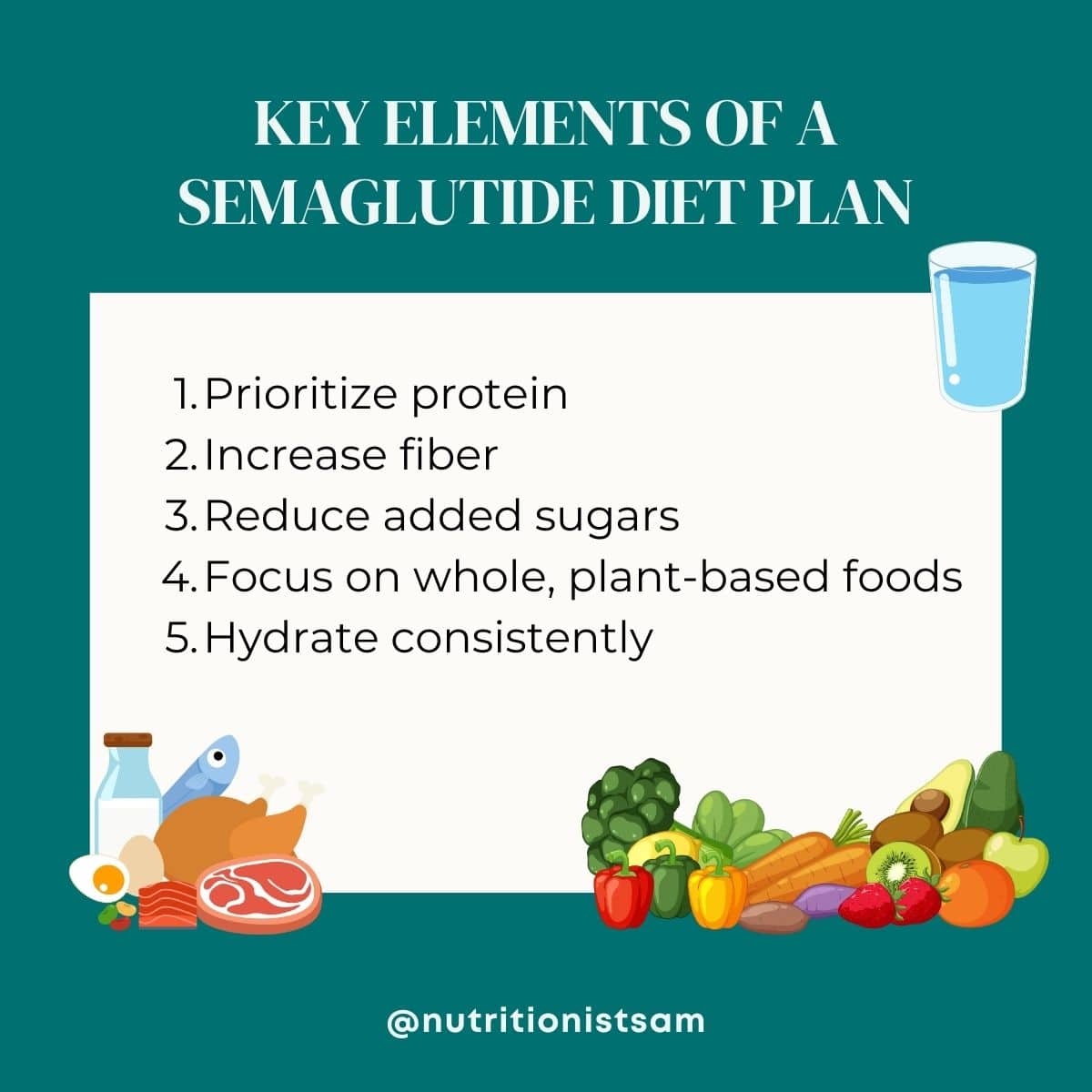
Key Elements of a Semaglutide Diet Plan
1. Prioritize protein
Protein is a cornerstone of any semaglutide diet plan because it helps preserve muscle mass. As you lose weight, you’ll lose some fat and muscle tissue. A proper semaglutide meal plan helps you maintain more muscle, which is important for healthy aging and your metabolism.
Additionally, protein helps control hunger and reduces cravings.
How Much Protein Do You Need? Aim for 1.2–1.5 grams of protein per kilogram of your ideal body weight. For example, if your goal weight is 145 pounds (about 66 kilograms), you should aim for 79–99 grams of protein daily. It’s helpful to spread your protein intake out over your meals and snacks.
Protein-Rich Foods to Include:
Lean meats: chicken, turkey, fish
Eggs and egg whites
Greek yogurt and cottage cheese
Plant-based options: tofu, edamame, lentils, and chickpeas
2. Increase fiber
Fiber is essential for managing hunger, supporting digestion, and regulating blood sugar levels. There are two types of fiber. Most foods include a mix of the two but are dominant in one form or another.
Soluble Fiber slows digestion and helps stabilize blood sugar. This type of fiber is found in oats, beans, and fruits like apples and citrus.
Insoluble Fiber adds bulk to stool and prevents constipation. Insoluble fiber is primarily found in whole grains, nuts, seeds, and vegetable skins.
Tips for Increasing Fiber:
Start your day with oatmeal topped with fruit and chia seeds.
Add beans or lentils to salads and soups.
Snack on raw veggies with hummus or guacamole.
3. Reduce added sugars
Lowering added sugar intake is crucial for maintaining stable blood sugar levels and achieving sustainable weight loss. Excess sugar can lead to energy crashes and cravings, making it harder to stick to healthy habits.
Remember that moderation is key! A sweet treat every once in a while is okay. However, I encourage you to find healthier ways to satisfy your sweet tooth for everyday indulgences. These banana bites are among my regular dessert rituals.
4. Focus on whole, plant-based foods
Whole, plant-based foods are nutrient-dense and naturally lower in calories and higher in fiber, making them ideal for weight loss and overall health. You don’t have to be exclusively plant-based unless you want to. When I suggest a pattern of plant-based eating, I’m suggesting this in the context of a diet that includes animal foods, like the Mediterranean and flexitarian diets. You can check out my other article explaining why an 80% plant-based diet is the healthiest way to eat. The bottom line is that most people will benefit from including more plant-based foods in their diet.
Here are a few examples of plant-dominant meals.
Lettuce Wraps topped with veggies (carrots, cucumber, edamame, green onion), lean protein (shrimp, tofu), whole grain (brown rice, quinoa)
Make your own bowl using a base of veggies, such as mixed greens and roasted broccoli, starches like brown rice, sweet potato, or quinoa, and a protein source (chickpeas, black beans, rotisserie chicken). Top with a sprinkle of nuts or seeds and your favorite flavor booster like sriracha.
Soups are a great way to pack in the nutrients into one plant-based dish! Try this Low Sugar Tomato Soup with Pasta recipe, which is perfect for a cozy day.
5. Hydrate consistently
Staying hydrated supports digestion and can help manage side effects like constipation. Aim for at least 8–10 cups of water daily, and consider adding herbal teas or flavored sparkling water for variety.
Common Side Effects of Semaglutide and How to Manage Them
Along with the intended effects, semaglutide medication may cause unwanted side effects, which can vary by individual. It may go without saying, but talk to your healthcare provider if any of these symptoms are severe or persistent.
Remember that these tips will help support you whether you’re taking semaglutide or another GLP-1 medication.
1. Nausea
Eat smaller, more frequent meals.
Avoid high-fat or greasy foods, which can worsen nausea.
Ginger or peppermint tea may help soothe an upset stomach.
2. Constipation
Increase fiber intake gradually to avoid bloating.
Stay hydrated to help fiber work effectively.
Add foods like prunes, pears, or a soluble fiber supplement to your diet. Here’s the fiber supplement I recommend. Buy it on Amazon!Note that I use affiliate links for the products I vet for my readers. These are my genuine recommendations and represent my years of experience testing and vetting products. It doesn’t cost you anything to shop through these links, and you’re under no obligation to shop or purchase through my site. When you do make a purchase through an affiliate link, I receive a nominal commission, which helps me provide this service to you. Thanks for supporting my site!
3. Bloating
Eat slowly and chew food thoroughly to reduce air intake.
Avoid carbonated drinks and gum, which can introduce extra air into your digestive system.
Tips for Meal Prep and Planning
When you’re working on your semaglutide diet plan, thoughtful meal prep can make all the difference. Here’s how to set yourself up for success:
1. Plan ahead
Write a weekly meal plan and grocery list to stay organized. You can do this on paper or in your notes app.
Batch cook staples like grilled chicken, roasted veggies, and quinoa for use in multiple meals.
2. Portion Strategically
Use smaller plates and bowls to control portions visually.
Pre-portion snacks into single servings to avoid overeating.
3. Make It Convenient
Keep healthy, ready-to-eat snacks on hand, like hard-boiled eggs, string cheese, or pre-cut veggies.
Use tools like slow cookers or air fryers to save time and effort.
The Role of Mindful Eating
Mindful eating can enhance the effectiveness of semaglutide by helping you tune into your body’s hunger and fullness cues.
Here are a few simple mindful eating practices that complement your semaglutide diet plan PDF.
Sit down at a table to eat and always use a plate, putting your utensils or finger food down between bites.
Take small bites and chew thoroughly.
Take time while eating to consider how your food tastes. Think about descriptive words like cool, creamy, earthy, hot, spicy, crunchy, and zesty.
Pause during your meal to assess your level of fullness.
Sample Semaglutide Diet Plan PDF
Below is a sample 1-day Semaglutide Diet Plan with a variety of recipes to kickstart your semaglutide meal plan. To get all of the recipes and a full 5-day semaglutide diet plan PDF, CLICK HERE!
Breakfast
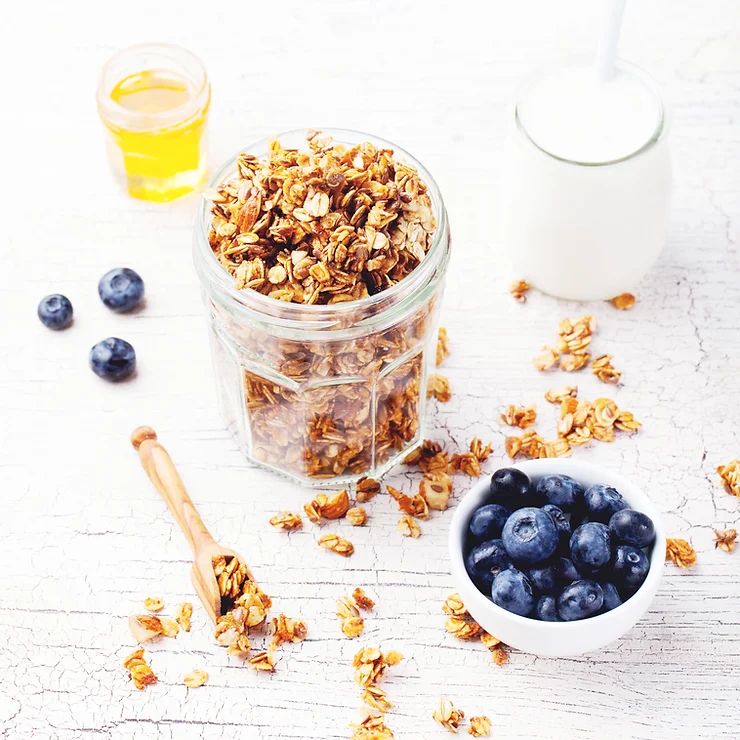
Sam’s Plate Blueberry & Cottage Cheese Oatmeal
Quick oats mixed with cottage cheese, protein powder and topped with blueberries, maple syrup and hemp seeds
Ingredients:
1/4 cup Quick Oats (dry)
1/2 cup Cottage Cheese
1/2 cup Vanilla Protein Powder (Unsweetened or lightly sweetened; here are my favorite protein powders that meet this mark.
1/4 cup Frozen Blueberries
2 tsps Hemp Seeds
1 tsps Maple Syrup
Directions:
Cook the oats according to package directions
Mix the cottage cheese and protein powder together in a bowl. Add the cooked oats and stir well. Top with the blueberries, maple syrup, hemp seeds (not pictured), and enjoy!
Nutrition Breakdown (per serving):
Calories: 442
Fat: 10g
Carbs: 35g
Protein: 54g
Fiber: 5g
Snack 1
Sam’s Plate Classic Guacamole and Cucumber slices
Combine avocado with cilantro, garlic, jalapeno, red onion, tomato, lime, and seasonings to make guacamole. Serve with a side of sliced cucumbers.
Nutrition Breakdown (per serving):
Calories: 205
Fat: 15g
Carbs: 19g
Protein: 4g
Fiber: 9g
Lunch
Sam’s Plate Meal Prep Greek Chicken Bowls
Brown rice topped with chicken, cucumber, red onion, tomato, and a Greek dressing makes the perfect meal prep meal.
Nutrition Breakdown (per serving):
Calories: 399
Fat: 11g
Carbs: 43g
Protein: 30
Fiber: 3g
Snack 2
Sam’s Plate Broccoli & Spiced Yogurt
Coconut yogurt, curry powder, and broccoli make the perfect high-fiber, 3-ingredient quick snack.
Nutrition Breakdown (per serving):
Calories: 93
Fat: 4g
Carbs: 13g
Protein: 3g
Fiber: 5g
Dinner
Salmon paired with quinoa and bell peppers makes a great high-protein, high-fiber meal to end the day.
Nutrition Breakdown (per serving):
Calories: 400
Fat: 13g
Carbs: 40g
Protein: 34g
Fiber: 6g
Snack 3
Wrap up with a sweet treat that involves apples covered in sweet coconut shreds, warm cinnamon, and high-protein yogurt, making it a perfectly balanced snack to avoid sugar crashes at night.
Nutrition Breakdown (per serving):
Calories: 155
Fat: 7g
Carbs: 18g
Protein: 8g
Fiber: 4g
Total Daily Nutrition:
Calories: 1694
Fat: 60g
Carbs: 168g
Protein: 133g
Fiber: 32g
Final Thoughts
Semaglutide is a powerful tool for weight loss and blood sugar management, but it’s most effective when combined with a thoughtful diet and lifestyle changes. By prioritizing protein, fiber, and plant-based foods while reducing added sugars, you’ll set yourself up for success. If you haven’t already done so, don’t forget to download your semaglutide meal plan here! You’ll get these recipes plus a full 5-day plan with recipes and a shopping list!
Oatmeal makes a big part of my daily meals and it is a good source of proteins and other necessary nutrients. Thanks to https://kodiakcakes.com/collections/oatmeal , I get to buy quality and organic food items that really help me maintain my fit body!
I’m Samantha Casetty, MS, RD, a registered dietitian nutritionist who has helped millions of people eat and feel better through my book Sugar Shock, my work as the Nutrition Director of Good Housekeeping, my regular TODAY.com column, and appearances on national TV including Dr. Oz and the TODAY Show.
Snacks can help you meet your balanced eating goals. Surprised? Learn how and find your 10 new favorite (sweet and savory) low-sugar, store-bought snacks.
Become a Member
Get trusted info, simple recipe ideas, and pro-picked resources for healthy eating, PLUS ask Sam all your burning nutrition questions!








2 Responses
Oatmeal makes a big part of my daily meals and it is a good source of proteins and other necessary nutrients. Thanks to https://kodiakcakes.com/collections/oatmeal , I get to buy quality and organic food items that really help me maintain my fit body!
I’m so glad you found something that works for you!