
Have you ever found yourself standing in front of the fridge, not physically hungry, but wanting something? This is a classic case of emotional hunger vs physical hunger. Maybe it was stress. Maybe it was boredom. Maybe it was just one of those days. Understanding the difference between emotional and physical hunger is one of the most powerful tools in learning how to care for your body without relying on diets or so-called willpower. As a registered dietitian, I’m going to break down what’s actually happening and how you can use awareness to respond with more compassion and clarity.
What Is Physical Hunger?
Physical hunger is your body’s biological way of saying, “Hey, I need fuel.”
It builds gradually over time and is usually accompanied by physical cues like:
- A growling stomach
- Low energy
- Feeling lightheaded or shaky
- Difficulty focusing
- Getting irritable or anxious
- General openness to different foods
This type of hunger is driven by hormonal signals like ghrelin, which rise when your stomach is empty and your body needs energy. It’s completely normal and totally appropriate to respond to it. I always tell my patients that hunger isn’t the enemy. It’s a normal signal to your body, and the goal is to learn how to be a better listener.
What Is Emotional Hunger?
Emotional hunger can come on suddenly and often feels urgent or specific, like “I need something salty right now” or “I have to have some chocolate.” It’s tied more to mood than biology. Common emotional triggers include:
- Stress or overwhelm
- Loneliness or boredom
- Anxiety or sadness
- Habitual patterns (like eating while watching TV)
- Seeking comfort, distraction, or reward
Unlike physical hunger, emotional hunger often:
- Feels immediate
- Craves specific foods
- Isn’t satisfied by fullness
- Can lead to guilt or shame after eating
It’s important to say this clearly: Eating emotionally just means something else (besides physical hunger) might be going on that needs attention. Food might help in the moment, but it doesn’t address the larger issue.
The Difference Between Appetite and Hunger
Hunger is a biological need for food. Staying alive is a very demanding job for your body, and it needs food in order to get the job done. Appetite is the desire to eat, which can be influenced by mood, environment, time of day, or even what smells good. Think of it as a want instead of a need.
You can have an appetite even when you’re not hungry. And that’s not inherently a bad thing. Think of appetite as part of your body’s communication system–it’s just more influenced by outside or emotional factors than pure biological hunger. Let’s say you’ve just finished dinner and you feel full, but someone puts cookies on the table. You might have one even though you’re not remotely hungry.
Your appetite tends to drive emotional hunger–eating for reasons other than physical hunger.
Another key difference between appetite and hunger is that you may be hungry, but have no appetite. This happens to people when they’re sick and can happen when they’re stressed. So, they know they have to eat something, but don’t have a desire for specific foods.
Understanding the difference between appetite and hunger can help you pause and ask: Is my body asking for food, or is something else going on?
Using the Intuitive Eating Hunger Scale
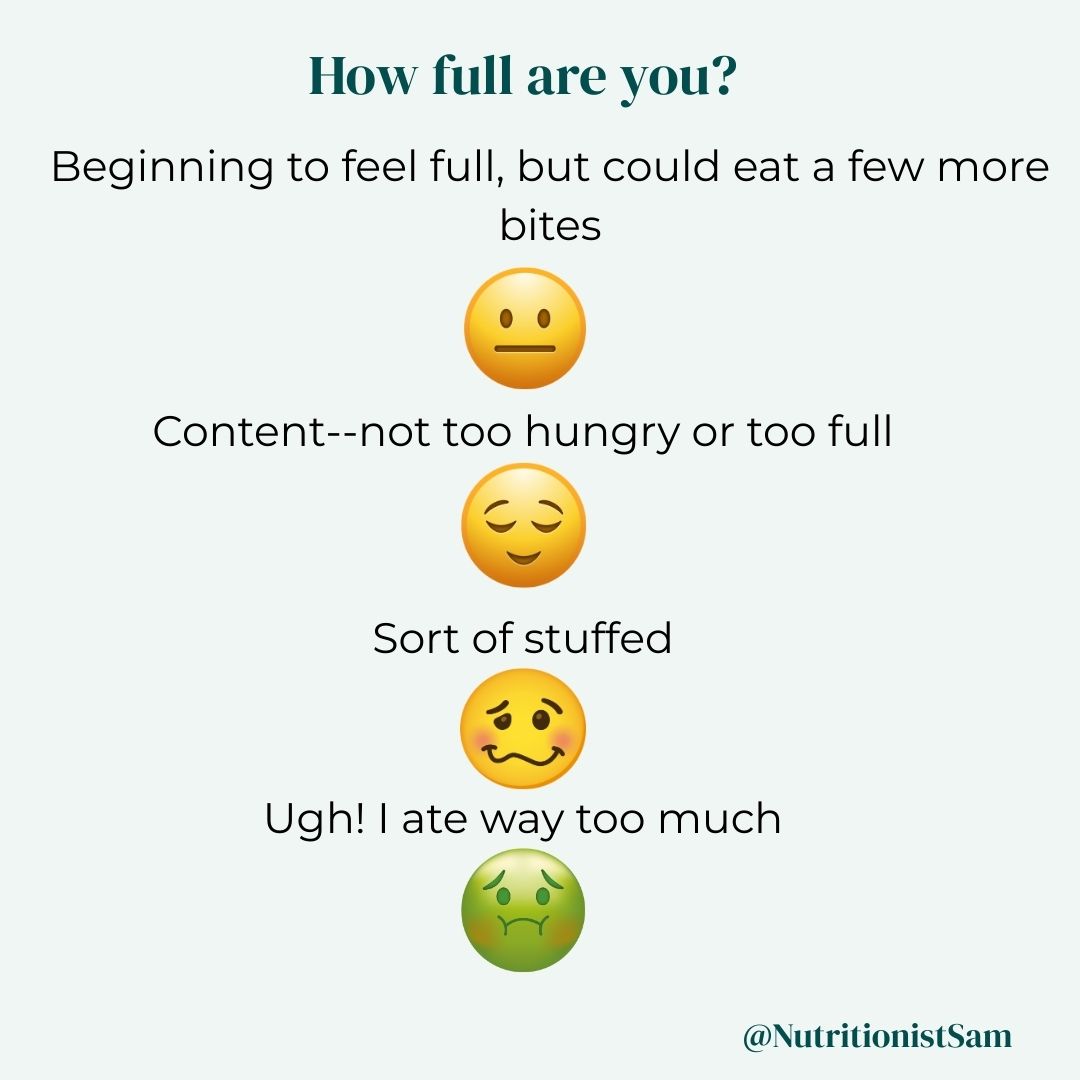
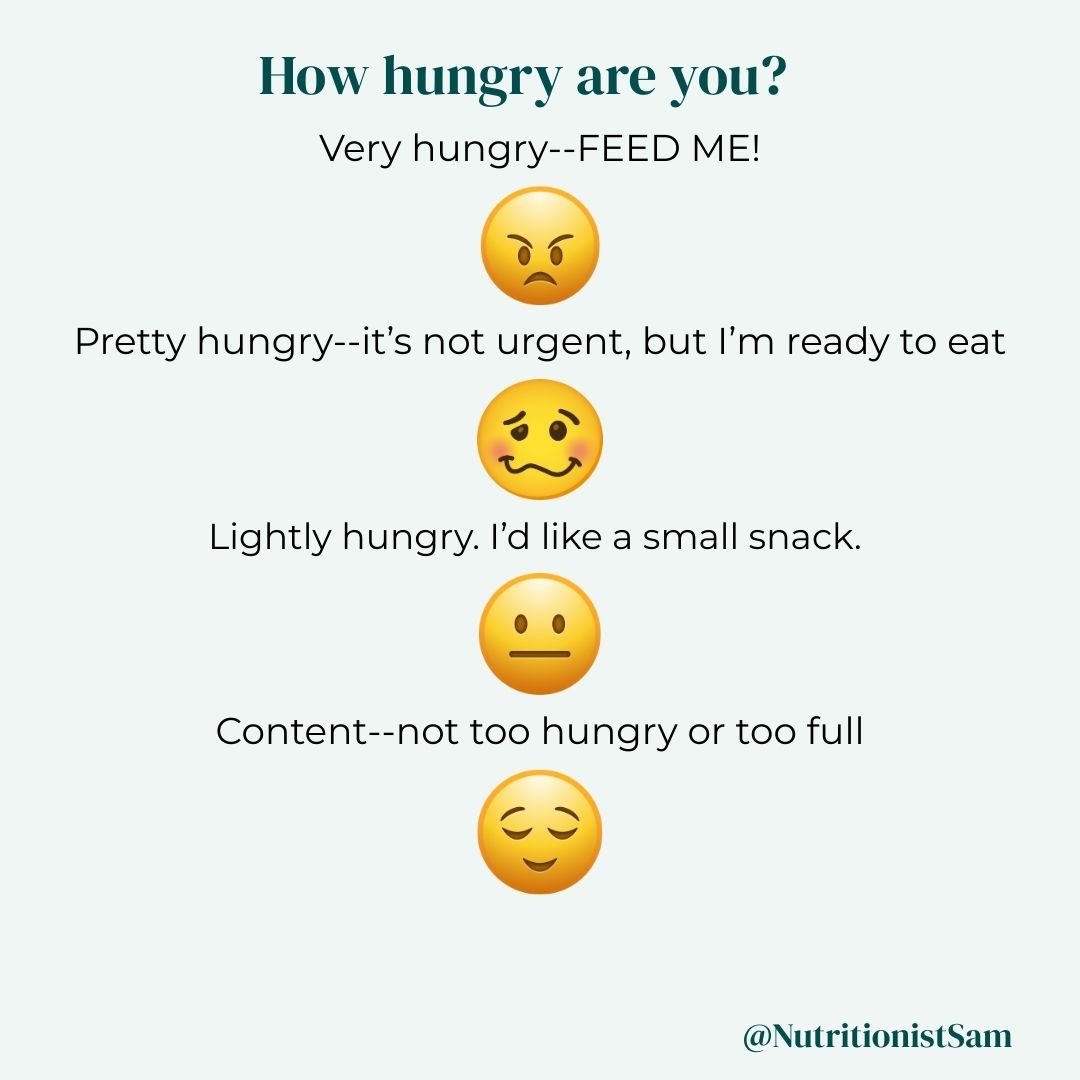 The Intuitive Eating Hunger Scale is a tool I often use with clients to help them tune into their body’s hunger signals. I created a modified version in emojis to help paint the picture, but the actual Intuitive Eating Hunger Scale ranges from 1 to 10.
1 = painfully hungry. You never want to be here.
5 = comfortably satisfied–you ate enough, but could still fit in a few more bites.
10 = uncomfortably full–the way you feel after a meal like Thanksgiving, where you have to unbutton your pants and you wish you had stopped eating long before you did.
Checking in with where you fall on this scale can help you decide when to eat, when to pause, and when to explore other needs.
How to Tell If You’re Experiencing Emotional Hunger vs. Physical Hunger
If you’re unsure whether your hunger is physical or emotional, try pausing to ask one (or all five) of these reflective questions.
- When did I last eat? Could this just be physical hunger building up?
- Do I feel this in my body or my mind?
- Would any food sound good, or just one specific thing?
- Is this a pattern I notice at certain times (like late at night or after a hard day)?
- What else might I be needing, such as a break, rest, connection, comfort, reward?
Even just asking these questions can create more awareness, along with the space to respond differently, whether that means choosing a snack, taking a breath, or puzzling for a few minutes to ride out a craving wave.
What If It Is Emotional Hunger?
Emotional eating is normal, and we’re all going to do it sometimes. But the goal is to expand your toolbox so that food isn’t the only tool you have. At times, food can be a comfort, distraction, reward, or activity. But it’s more helpful to have other coping strategies for the long run. Here are a few gentle alternatives you might try:
- Step outside for 5 minutes of fresh air
- Write down what you’re feeling without judgment
- Call or text someone
- Set a timer and do something else, like coloring, making a playlist, listening to an audiobook, cleaning a drawer–whatever works for you!
If you still want the food afterward, it’s okay to eat it. However, I’d encourage you to keep experimenting with different tools until you find something that works for you.
Final Thoughts about Emotional Hunger Vs. Physical Hunger
Understanding the difference between emotional and physical hunger means learning how to be more connected to your body. It’s about tuning in with curiosity and noticing patterns. For instance, I have a client who struggles with emotional eating. She shared that she was always rewarded with food as a kid, which she observed after paying attention to her emotional eating triggers.
The more you practice tuning in–whether through tools like the intuitive eating hunger scale, reflection questions, or simply pausing to ask, “What do I need right now?”–the easier it will become to meet your own needs with the right tools.
Want More Support?
If you’re working on healing your relationship with food, I’d love to support you. Many of my clients are able to work with me through their insurance at no cost. You can reach out here to learn more or see if you’re eligible.
Or, get helpful strategies like this in your inbox by joining my newsletter and getting a free snack booklet here!
Key Points
If this article was too long to read, here are the bulleted key points for ya!
- Physical hunger is a gradual, biological need for food. It builds up.
- Emotional hunger is often tied to feelings or stress, and it can involve craving specific foods.
- Appetite is the desire to eat, which may or may not be linked to hunger.
- The Intuitive Eating Hunger Scale can help you build awareness without judgment.
- We all eat for emotional reasons at time, but it’s more helpful to develop awareness and respond to your emotions with more supportive tools.
Additional Resources
- If you like this article, you’ll probably also like 7 ways to stop stress eating.
- Do you experience food noise? Here’s what to do about it.
- Are you struggling with body insecurity? Here’s how to stop hating your body.